Understanding Password-Based Encryption: An Extra Layer of Security
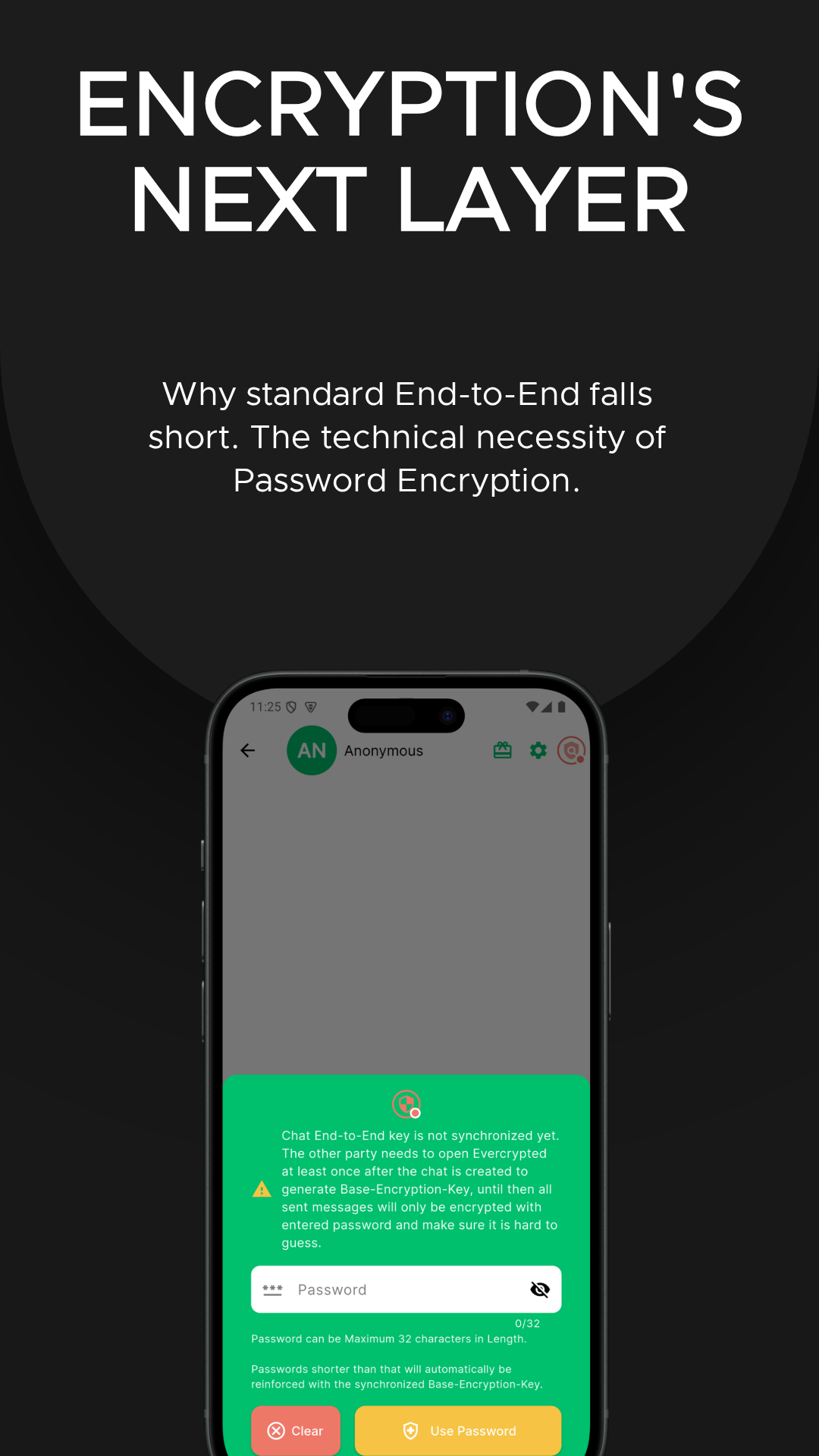
Understanding Password-Based Encryption
While end-to-end encryption provides robust protection for your messages, password-based encryption adds an extra layer of security for your most sensitive communications.
What is Password-Based Encryption?
Password-based encryption allows you to protect individual messages or conversations with an additional password. This means that even if someone gains access to your device, they cannot read these protected messages without knowing the password.
How Does It Work?
When you enable password-based encryption for a message:
You create a password: that only you and your recipient know
The message is encrypted: using this password before being sent
The recipient enters the password: to decrypt and read the message
This creates a double layer of protection: the message is first encrypted end-to-end by the app, then additionally encrypted with your chosen password.
When to Use Password-Based Encryption
Consider using password-based encryption for:
Best Practices
Share passwords securely: Never share the password through the same channel as the encrypted message. Use a different medium like a phone call.
Use strong passwords: Create unique passwords for different conversations.
Don't write passwords down digitally: If you must record a password, use secure methods.
Evercrypted's Approach
At Evercrypted, password-based encryption is built into our platform for premium users. This feature allows you to add an extra layer of protection to any message or conversation, giving you complete control over who can access your most sensitive communications.
