The Quantum Threat: Why Post-Quantum Encryption Matters Today
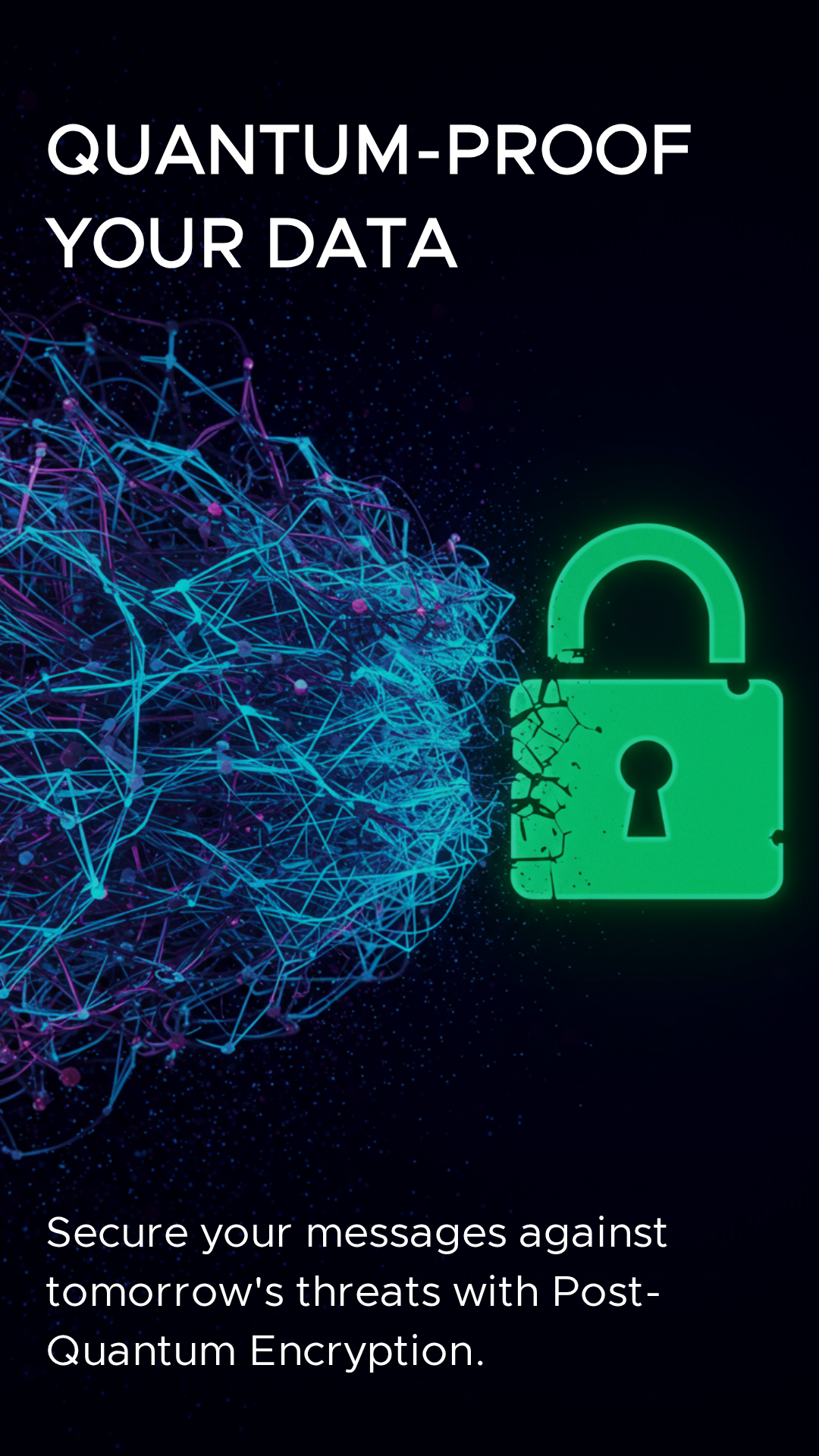
The Looming Quantum Apocalypse
We are standing on the precipice of a cryptographic revolution. Quantum computers—machines that leverage the principles of quantum mechanics—are rapidly advancing. While they promise breakthroughs in medicine and materials science, they pose an existential threat to digital security.
The Problem: Shor's Algorithm
Most current encryption systems (like RSA and Elliptic Curve Cryptography) rely on math problems that are hard for classical computers but easy for quantum computers. A sufficiently powerful quantum computer running Shor's Algorithm could shatter these defenses in minutes, exposing everything from bank records to state secrets.
When Will It Happen?
Experts predict that a cryptographically relevant quantum computer could emerge within the next decade, potentially by the early 2030s.
But the threat is here now.
Harvest Now, Decrypt Later
Attackers, including nation-states, are already executing "Harvest Now, Decrypt Later" (HNDL) attacks. They steal and store encrypted data today, waiting for the day they possess the quantum power to unlock it. Your private messages sent today could be read by an adversary in the future if they aren't protected by quantum-safe encryption.
The Solution: Post-Quantum Cryptography (PQC)
Post-Quantum Cryptography involves new mathematical algorithms believed to be resistant to both classical and quantum computers. These often rely on lattice-based cryptography, which involves finding points in a high-dimensional grid—a problem that remains incredibly difficult even for quantum machines.
Our Defense Stack: Crystals-Kyber & XChaCha20Poly1305
At Evercrypted, we don't wait for the future; we prepare for it. We implement a hybrid encryption scheme using the strongest available primitives.
#### Crystals-Kyber 1024 (Key Encapsulation)
We use Crystals-Kyber 1024 for Key Encapsulation Mechanisms (KEM).
#### XChaCha20Poly1305 (Symmetric Encryption)
For the actual encryption of data, we use XChaCha20-Poly1305.
Conclusion
The quantum era is not a distant sci-fi concept; it is a developing reality. By adopting post-quantum standards like Crystals-Kyber 1024 alongside robust symmetric ciphers like XChaCha20Poly1305, Evercrypted ensures your conversations remain private today, tomorrow, and decades into the future.
