Famous Keylogger Attacks and Why Evercrypted's Built-in Keyboard Matters
The Silent Threat: Keyloggers
Keyloggers are among the most dangerous forms of malware. They silently record every keystroke you make—passwords, messages, credit card numbers—and send them to attackers. Even end-to-end encryption can't protect you if a keylogger captures your messages before encryption.
Infamous Keylogger Attacks in History
#### Zeus (2007-2014)
One of the most notorious banking trojans ever created. Zeus infected millions of computers worldwide and stole hundreds of millions of dollars by capturing banking credentials as users typed them. At its peak, Zeus compromised over 3.6 million PCs in the United States alone.
#### SpyEye (2010-2012)
A successor to Zeus, SpyEye combined keylogging with form grabbing and web injection attacks. It specifically targeted online banking sessions and was responsible for stealing an estimated $1 billion globally.
#### Pegasus (2016-Present)
Developed by NSO Group, Pegasus is a sophisticated spyware that can infect both iOS and Android devices. It captures everything—keystrokes, messages, calls, location—and has been used to target journalists, activists, and political figures worldwide.
#### Agent Tesla (2014-Present)
A commercial keylogger sold as a "legitimate" monitoring tool but widely used for malicious purposes. Agent Tesla can capture keystrokes, screenshots, and clipboard data, and remains one of the most common malware threats today.
#### Snake Keylogger (2020-Present)
A relatively new but highly effective keylogger that spreads through phishing emails. It's designed to steal credentials from browsers, email clients, and FTP applications.
Why Traditional Keyboards Are Vulnerable
When you type on your phone's default keyboard:
1. Every keystroke passes through the operating system
2. Third-party keyboards may have cloud sync enabled
3. Malware can hook into keyboard APIs
4. Accessibility services can monitor all input
5. Screen recording can capture your typing
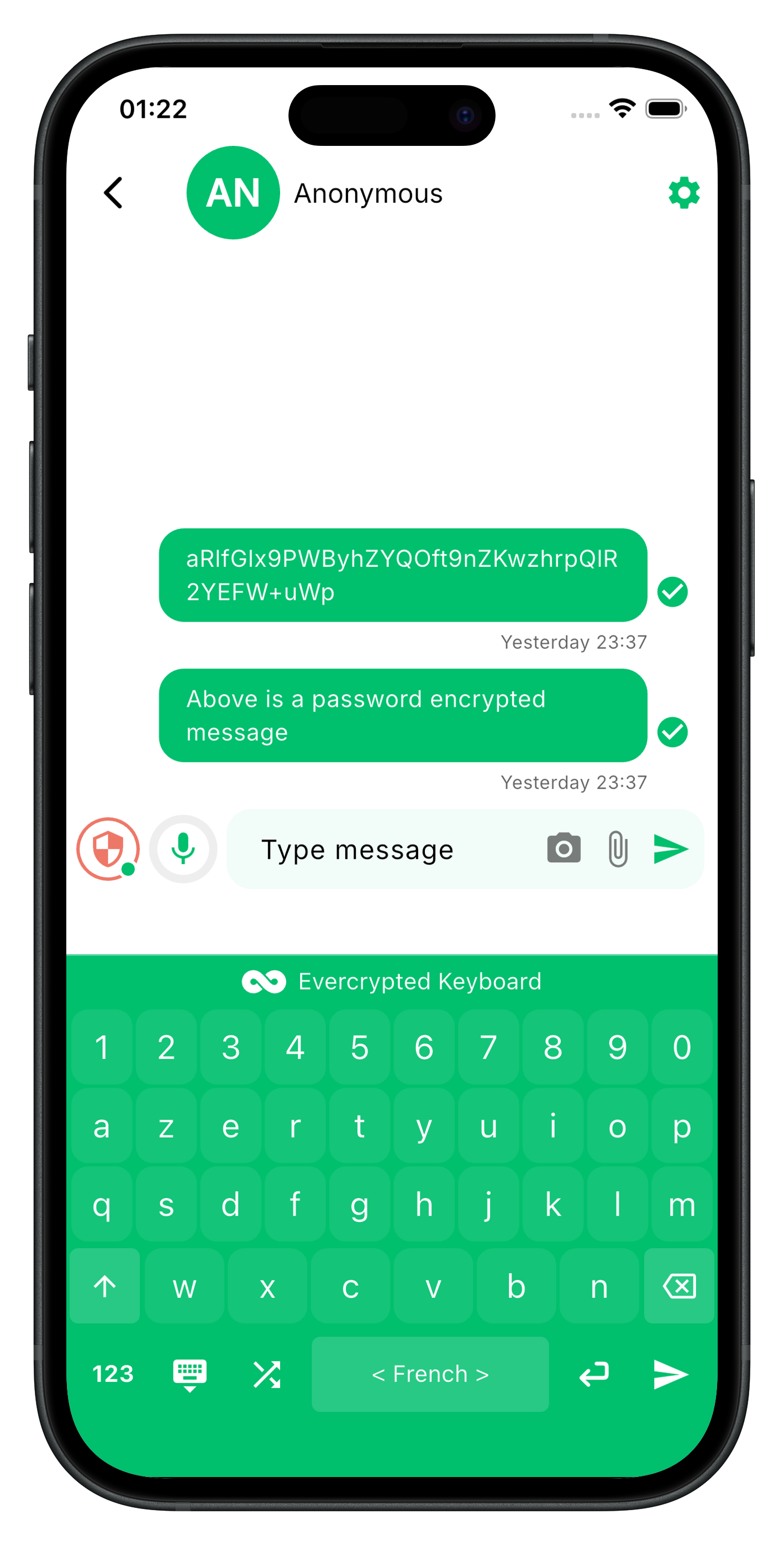
Evercrypted's Built-in Secure Keyboard
Evercrypted includes a purpose-built secure keyboard that operates differently from standard keyboards:
Isolated Input: Our keyboard operates within the app's secure environment. Keystrokes are processed internally and never exposed to the operating system's typical input channels that malware can intercept.
No Cloud Sync: Unlike popular keyboards that sync your typing patterns and predictions to the cloud, Evercrypted's keyboard stores nothing and transmits nothing outside the app.
No Third-Party Code: We don't use third-party keyboard libraries that could contain vulnerabilities or hidden data collection.
No Accessibility Hooks: Our keyboard doesn't expose data through accessibility services, which are commonly exploited by keyloggers.
Best Practices for Keyboard Security
Use Evercrypted's keyboard: for all sensitive communications within the app
Avoid third-party keyboards: for banking and password entry
Check keyboard permissions: in your device settings
Keep your device updated: to patch security vulnerabilities
Be cautious with apps: that request accessibility permissions
The Bottom Line
Your keyboard is the first point of contact for every sensitive piece of information you type. By building our own secure keyboard directly into Evercrypted, we've eliminated one of the most dangerous attack vectors that even end-to-end encryption cannot protect against.
When you type a password-encrypted message in Evercrypted, you can be confident that your keystrokes are captured only by our app—not by malware lurking in the background.
